
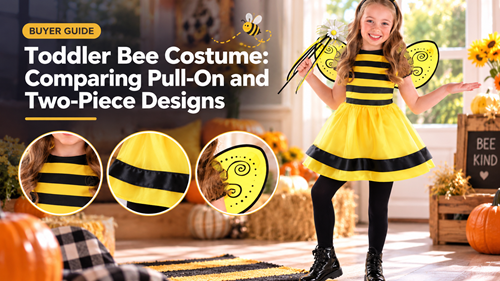
A toddler bee costume is easier to choose when parents compare how the design works during real movement instead of only comparing the front photo. Pull-on outfits can be fast to dress and visually simple, while two-piece designs can make layering and bathroom access easier. The right format depends on the child, event length, weather, and how independently the toddler moves.
Toddlers sit on the floor, run, climb steps, reach for snacks, use strollers, and may need quick bathroom or diaper changes. Wings, headbands, tutus, and tails can change how either design feels. A practical costume should remain recognizable after optional accessories are removed.
How To Evaluate Toddler Bee Costume
A toddler bee costume should allow the child to walk, squat, sit, climb a small step, and raise both arms without the garment pulling at the neck or crotch. These movements reveal fit problems that a standing mirror check can miss.
Pull-on designs often use a tunic, jumpsuit, dress, or one-piece body. They can stay aligned during play but may take longer to remove for bathroom access. Two-piece designs separate the top from a skirt, pants, or tutu, which can simplify layering but create more pieces that shift independently.
Check how much of the bee look remains in the base clothing. If the theme disappears when wings or a headband are removed, the outfit may be less practical for daycare, parties, or long events.
Toddler Bee Costume Details That Matter
Toddler Bee Costume Sizing
Use the child’s current height, chest, waist, and inseam when available. A one-piece costume needs enough torso length for sitting and bending, while a two-piece set needs waistbands that stay up without squeezing.
For a concrete fit comparison, review toddler bee costume sizing and check the current size chart against the child’s measurements.
Toddler Bee Costume Materials
Soft knit and lightweight polyester can move differently from plush fabric, stiff tulle, or foam. Look for smooth seams, breathable base layers, and decoration that does not scratch when the child sits or bends.
Use toddler bee costume materials as a material and construction example, then verify the current fabric description.
Toddler Bee Costume Buying Guide
A strong buying process compares size, closure type, bathroom access, warmth, removable accessories, cleaning, and return rules before decoration. Toddlers often benefit from simpler outfits that can be adjusted during the event.
The site’s toddler bee costume buying guide expands on fit and comfort checks that apply to both pull-on and two-piece designs.
Toddler Bee Costume Fit Tips
Test the outfit over the intended base layer and footwear. Watch for rising hems, tight armholes, slipping waistbands, and wings that tilt when the child moves quickly.
Compare toddler bee costume fit tips with the chosen design to see how another toddler costume handles body fit and attached pieces.
Toddler Bee Costume Features
Helpful features include front openings, elastic waists, soft headpieces, removable wings, reflective yellow details, and enough pocket or bag space for small essentials. Features should solve a practical need, not create extra bulk.
Review toddler bee costume features for another construction style, then decide which features match the event.
Toddler Bee Costume Care
Toddlers may spill food, sit on floors, or wear the costume outdoors. Check whether the garment can be washed, whether wings must be removed first, and whether foam or tulle needs spot cleaning.
Use toddler bee costume care to compare care and storage requirements for another toddler-oriented costume.
Toddler Bee Costume Accessories
Headbands, wings, striped socks, and bags can be fun but should remain optional. Avoid long cords, rigid props, or pieces that fall into the child’s face during running or climbing.
For accessory planning, review toddler bee costume accessories and choose only the pieces the toddler can wear comfortably.
Pull-On And Two-Piece Toddler Costume Comparison
Use this table to decide which construction better fits the child’s routine and event.
| Decision | Pull-On Design | Two-Piece Design |
|---|---|---|
| Dressing speed | Often one main garment | Several pieces to coordinate |
| Bathroom access | May require more undressing | Usually easier to separate top and bottom |
| Layering | Base layer must fit underneath | Top and bottom can be adjusted separately |
| Movement | Pieces stay aligned | Waistband or top may shift independently |
| Storage | Fewer main pieces | More pieces to label and pack |
| Backup plan | Remove accessories first | One piece can sometimes be replaced |
Test The Toddler Bee Costume Before The Party
The most useful test is a short period of normal play in the complete outfit. Let the child walk, sit, squat, climb one step, and use the bathroom or practice a diaper change before event day.
Toddler Costume Checklist
- Measure height and waist first
- Try the exact planned base layer
- Check bathroom or diaper access
- Walk and squat in the costume
- Test wings near doorways and chairs
- Check headwear after active movement
- Pack a simple backup outfit
- Label all removable pieces
If one accessory causes most of the trouble, remove that accessory instead of forcing the child to keep the full set on. A simpler bee costume that stays comfortable is usually more useful than a complete set that becomes frustrating.
Choose Movement And Visibility Over Extra Pieces
Keep the face fully visible and make sure hems, tails, wings, and props do not create a trip hazard. Shoes should fit normally and should not be covered by costume fabric that can slide under the sole.
Check small decorations before every wear and remove loose pieces. Stop using the outfit if the child shows pain, numbness, overheating, or repeated difficulty moving.
For general dress-up precautions, review the CPSC costume safety guidance together with the event’s own rules.
Pick The Toddler Bee Costume Format That Fits The Routine
A toddler bee costume does not need the same construction for every child. Pull-on designs can simplify the visual look, while two-piece designs can make layering and bathroom access easier.
Measure the child, rehearse real movement, and keep accessories removable. The best format is the one that still works after the first hour of play.
Frequently Asked Questions
Is a pull-on toddler bee costume easier to use?
It can be faster to dress, but bathroom access may be slower. Test the exact closure and garment length before the event.
Is a two-piece bee costume better for potty training?
Often it can be easier because the top and bottom separate, but the waistband and accessories still need to be tested.
Should I size up for layering?
Use the manufacturer’s chart and measure over the planned base layer when possible. Oversizing can create loose fabric and trip hazards.
Are wings practical for toddlers?
They can be when lightweight, secure, and removable. Remove them in crowded or seated situations if they interfere.
What should I pack as a backup?
Bring normal clothes or a simple black-and-yellow outfit, plus a bag for any wings, headwear, or accessories that are removed.
