
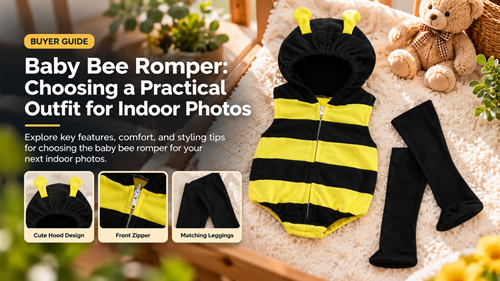
A baby bee romper for indoor photos should make dressing, posing, feeding, and diaper changes easier rather than turning a short photo session into a complicated costume change. Parents planning baby photo sessions should focus on soft materials, practical closures, a clear face, comfortable room temperature, and a design that stays recognizable without bulky accessories.
Indoor photography removes some weather problems but creates new practical questions. Studio lights can add warmth, floors and props can change how the baby sits, and repeated repositioning can make tight elastic or stiff headwear noticeable. The best outfit is one that photographs well while still allowing the baby to move, rest, feed, and be changed normally.
How To Evaluate Baby Bee Romper
A baby bee romper should be evaluated around the full photo-session routine: dressing, carrying, sitting, tummy time, feeding, diaper changes, and breaks. A cute hood or plush body is only useful if the baby remains comfortable throughout those steps.
Check the neck opening, sleeve or armhole shape, leg openings, and crotch closure. Nothing should bunch behind the neck, press into the thighs, or make a diaper change require complete undressing.
Also look at the colour contrast in normal room light. Strong black-and-yellow sections usually read clearly in photos without needing several extra props, which can keep the setup simpler and safer.
Baby Bee Romper Details That Matter Before Photos
Baby Bee Romper Sizing
Use current height, weight, chest, and torso length when the seller provides them. Age labels alone can be unreliable, especially when the romper includes a hood, footed legs, or a fitted crotch closure.
For a practical on-site example, review baby bee romper sizing and compare the listed measurements with the baby’s current size before ordering.
Baby Bee Romper Materials
Soft knit, fleece, velour, polyester plush, and cotton blends can feel very different under studio lights. Check whether the fabric stretches, whether seams are covered, and whether decorative wings or stripes are sewn securely.
Use baby bee romper materials as a material comparison point, then verify the current fabric description and care instructions.
Baby Bee Romper Buying Guide
A good buying decision balances fit, comfort, closure access, warmth, return policy, and how much of the bee look comes from the romper itself. For a photo session, one strong outfit is usually more useful than a complicated multi-piece set.
The site’s baby bee romper buying guide gives additional photo-focused ideas for keeping the outfit and background simple.
Baby Bee Romper Fit Tips
Try the romper while the baby is calm and awake. Check kicking, arm movement, neck clearance, and how the fabric behaves when the baby sits or lies down. Remove the hood if it slips toward the eyes.
Compare baby bee romper fit tips to see how a different infant costume shape handles body fit and head coverage.
Baby Bee Romper Features
Useful features include a front or crotch opening, soft hood lining, roomy legs, removable wings, and minimal hard decoration. Photo props should never be necessary to keep the outfit together.
Review baby bee romper features for another simple infant bee format, then compare closures and accessory bulk.
Baby Bee Romper Care
Photo outfits can pick up makeup, drool, food, and floor dust quickly. Check whether the romper can be washed before and after the session and whether plush or attached wings need special drying.
Use baby bee romper care to compare care expectations for another baby bee costume before relying on the outfit for repeated sessions.
Baby Bee Romper Accessories
Headbands, wings, baskets, signs, and flowers can support the theme, but every extra piece adds setup time. Keep small parts out of reach and remove anything that the baby grabs, mouths, or resists.
For accessory ideas, review baby bee romper accessories while remembering that infant photo props should be selected and supervised more conservatively.
Indoor Photo Romper Comparison
Use this table before the session so clothing decisions support both the photo and the baby’s routine.
| Check | What To Look For | Why It Matters |
|---|---|---|
| Body fit | Room for kicking and bending | Keeps poses natural |
| Closure access | Fast diaper opening | Reduces full outfit changes |
| Fabric warmth | Comfortable for the indoor room | Studio lights can add heat |
| Hood or headwear | Clear of eyes and mouth | Keeps face visible |
| Accessories | Large, secure, removable | Simplifies breaks and feeding |
| Care | Washable after drool or spills | Makes reuse easier |
Plan The Baby Bee Romper Photo Session
A successful photo session usually comes from a comfortable baby and a simple setup. Dress the baby after the room, camera, blanket, and props are ready so costume time stays short.
Indoor Photo Checklist
- Check the room temperature
- Try the romper before photo day
- Practice one diaper change in the outfit
- Use a simple neutral background
- Keep props out of the baby’s mouth
- Take hood-off photos as a backup
- Schedule feeding and rest breaks
- Pack a normal backup outfit
If the baby becomes warm, fussy, hungry, or tired, pause the session and remove accessories. A shorter comfortable session usually produces better photos than trying to finish every planned pose.
Keep The Photo Setup Baby-Led
Never place a baby on an unstable prop, elevated surface, or inside a container that can tip. Keep an adult within reach and use floor-level setups whenever possible.
Remove the baby bee romper for sleep and use normal safe-sleep clothing and surfaces. Costumes, wings, hoods, and photo props are not sleepwear.
For broader child costume precautions, review AAP Halloween safety guidance and apply the same clear-vision and supervision principles during dress-up photos.
Choose A Baby Bee Romper That Keeps Photos Simple
A baby bee romper works best for indoor photos when it creates the theme without making normal baby care difficult. Soft fabric, practical closures, controlled warmth, and a clear face matter more than extra decorative pieces.
Measure carefully, test the romper before photo day, and keep accessories optional. That makes it easier to get useful photos while respecting the baby’s comfort and routine.
Frequently Asked Questions
Should I size up a baby bee romper for photos?
Use the exact product chart rather than sizing up automatically. Extra loose fabric can bunch around the face or make the outfit look oversized in photos.
Is a hooded romper good for indoor photos?
It can be, but the hood should stay clear of the eyes and mouth and should be removed if the baby dislikes it or becomes warm.
How long should a baby stay in a costume for photos?
Use short supervised periods and take breaks whenever the baby becomes warm, hungry, tired, or fussy.
Do I need wings for a baby bee photo?
No. Black-and-yellow stripes can carry the bee theme by themselves, and removable wings can be added only for a few photos.
What should I bring to an indoor baby photo session?
Bring diapers, wipes, feeding supplies, a normal backup outfit, a blanket, and only the props you can supervise easily.
