
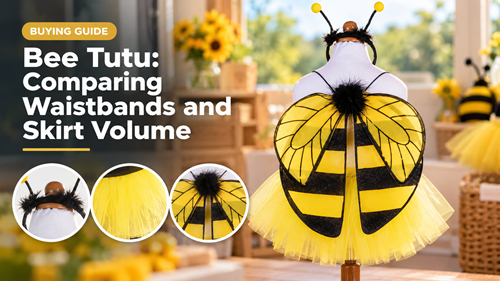
A bee tutu can look simple in a product photo, but the way the waistband stretches and the way the skirt holds its shape determine how comfortable and practical it feels in real use. Parents and dancers shopping for tutus should compare fit, layer count, stiffness, waistband construction, coverage, and how the skirt behaves while walking, sitting, spinning, or wearing tights underneath.
The best choice is not always the fullest skirt. A very wide tutu can look dramatic but may brush chairs, catch on accessories, or feel bulky during active play. A lighter skirt may move more easily but provide less visual volume. Measure first, read the exact seller size chart, and compare the garment against the event rather than choosing only by the listing photo.
How To Evaluate Bee Tutu
A bee tutu should be evaluated as a wearable garment, not only as a decorative accessory. Check whether the waistband sits flat, whether elastic returns to shape after stretching, and whether the skirt stays clear of the wearer’s feet while walking and turning.
Look at how the tulle or mesh is attached to the waistband. Closely packed layers usually create more volume, while fewer or softer layers create a lighter silhouette. Neither is automatically better; the right balance depends on whether the costume is for a dance class, photo session, school activity, party, or casual dress-up.
Also separate the tutu from the rest of the costume. Wings, socks, headbands, and tops can change how the waistband feels and how the skirt sits at the waist. The complete outfit should still allow normal movement, bathroom breaks, and comfortable sitting.
Bee Tutu Details That Matter Before Buying
Bee Tutu Sizing
Measure the natural waist and compare it with the exact product chart rather than age labels alone. Elastic that is too tight can roll or leave pressure marks, while a very loose waistband can twist or slide during movement.
For a concrete on-site comparison, review bee tutu sizing and compare its size guidance with the wearer’s measured waist before ordering.
Bee Tutu Materials
Tulle, mesh, polyester lining, satin trim, and elastic can all affect softness, opacity, and how much the skirt holds its shape. Touchy or stiff layers may be fine over leggings but uncomfortable directly against sensitive skin.
Use bee tutu materials as a product example, then verify the current material description and whether the skirt includes a lining or only layered mesh.
Bee Tutu Buying Guide
A useful buying process compares waistband range, skirt length, layer count, included accessories, care instructions, and return rules before price. A cheaper set can become less useful if the skirt cannot be worn comfortably for the planned activity.
The site’s bee tutu buying guide offers a broader accessory framework that can help you decide which included pieces actually add value.
Bee Tutu Fit Tips
Try the tutu over the same base layer planned for the event. Ask the wearer to sit, bend, walk, and turn. The waistband should remain level and the skirt should not pull upward, twist around the hips, or interfere with the knees.
Compare bee tutu fit tips against a complete multi-piece set to see how the tutu behaves when wings, socks, and headwear are added.
Bee Tutu Features
Useful features can include a soft covered waistband, removable accessories, a modesty layer, lightweight tulle, or reflective yellow details. Extra decoration is only helpful when it stays secure and does not make the skirt heavy or scratchy.
Review bee tutu features for an example of a feature-rich costume set, then decide which features matter for the actual event.
Bee Tutu Care
Tulle can crease, snag, or lose shape when compressed. Check whether the product is hand-wash only, spot-clean, or machine washable, and allow the skirt to air dry fully before storage.
Use bee tutu care to compare care expectations and packaging before deciding how the costume will be stored between events.
Bee Tutu Accessories
Wings, antennae, striped socks, gloves, and wands can strengthen the bee theme, but the outfit does not need every piece at once. Remove anything that limits movement or makes sitting difficult.
For accessory planning, compare bee tutu accessories and keep only the pieces that remain comfortable with the chosen tutu.
Bee Tutu Waistband And Volume Comparison
Use this table during try-on so the visual style can be compared with practical comfort.
| Check | What To Look For | Why It Matters |
|---|---|---|
| Waistband | Flat elastic with comfortable stretch | Helps prevent rolling and pressure |
| Skirt volume | Enough fullness for the look without excessive width | Improves movement and seating |
| Layer softness | No sharp edges against skin or tights | Reduces scratching and irritation |
| Length | Clear of knees, shoes, and steps | Supports safe walking and dancing |
| Coverage | Lining or suitable base layer | Avoids transparency and friction |
| Accessories | Secure and removable | Lets the outfit be simplified quickly |
Test The Complete Bee Tutu Before Event Day
A short home wear test catches more problems than a mirror check. Use the same base layer, tights, shoes, wings, and headwear planned for the event.
Pre-Event Tutu Checklist
- Measure the waist before ordering
- Check skirt length while standing
- Sit in a chair without bunching
- Walk and turn at normal speed
- Test the costume with tights or leggings
- Check that wings do not snag the tulle
- Confirm bathroom access
- Store the skirt without crushing it
If the skirt feels too full, remove optional accessories before changing size. If the waistband is the problem, a different size or construction is usually a better fix than stretching elastic aggressively.
Comfort And Movement Come Before Extra Volume
Keep tulle and decorative pieces away from open flames, heaters, and candles. Check for loose glitter, sequins, beads, or small decorations before every use, especially when younger children are wearing the outfit.
Stop using or modify the tutu if the waistband causes pain or numbness, the skirt creates a trip hazard, or accessories block vision or normal arm movement.
For general costume checks, review the CPSC Halloween costume safety guidance alongside the current product directions and event rules.
Choose The Bee Tutu That Moves As Well As It Looks
A bee tutu is a stronger purchase when waistband fit, skirt volume, material feel, and accessories are tested as one outfit. The most dramatic skirt is not automatically the best choice for dancing, sitting, or long party wear.
Measure first, compare the real construction, and keep optional accessories removable. That gives the wearer a clear bee look without sacrificing movement or comfort.
Frequently Asked Questions
How tight should a bee tutu waistband be?
It should stay in place without digging in, rolling, or leaving strong pressure marks. Use the product’s size chart and the wearer’s actual waist measurement.
Is a fuller bee tutu better for dancing?
Not always. Extra volume can look good on stage but may interfere with turns, spacing, or seated positions. Test the skirt with the actual choreography.
Should a bee tutu have a lining?
A lining can improve coverage and reduce scratchiness, but some tutus are designed to be worn over leggings or a leotard instead.
How do I remove wrinkles from tulle?
Follow the care label. Hanging the tutu and allowing time for the layers to relax is often safer than direct high heat.
Can wings be worn with a full tutu?
Yes when the straps stay secure and the wings do not snag the tulle or restrict arm movement.
