
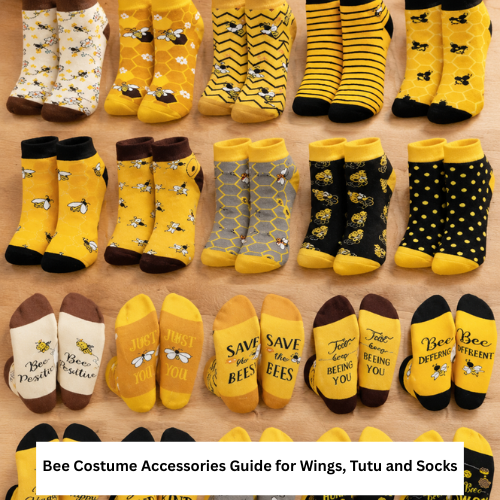
Choosing bee costume accessories is easier when you consider the costume wearer’s age, body size, planned activity, comfort, and existing yellow and black clothing. Wings, antenna headbands, tutus, striped socks, glasses, gloves, and other extras can complete a bee outfit without requiring a full costume.
Parents may need lightweight accessories that stay secure during school plays or trick or treating. Adults may prefer larger wings, longer socks, adjustable headbands, or coordinated pieces for parties and group costumes. Every item should be checked for fit, visibility, small parts, and movement before the event.
How to Choose Bee Costume Accessories
Start with the base outfit. A yellow and black shirt, dress, bodysuit, or plain black clothing may need only two or three accessories to create a recognizable bee look.
Avoid choosing the largest set only because it contains more pieces. A smaller set with comfortable and compatible items may be easier to wear and manage.
| Accessory | Best use | Main fit check | Common limitation |
| Bee wings | Creates the main insect shape | Strap length and wing width | Can catch on doors or other people |
| Antenna headband | Makes a simple outfit recognizable | Headband pressure and head size | May slip during movement |
| Bee tutu | Adds color and volume | Waist range and skirt length | Can restrict sitting or crowded movement |
| Striped socks or tights | Extends the yellow and black pattern | Foot, calf, and leg size | May slide or feel tight |
Choosing Bee Wings
Bee wings should be wide enough to create a clear costume shape but not so wide that they block movement. Measure the wearer’s shoulder width and consider the space available at the event.
A bee wings and antenna headband set can create the main bee look quickly, but buyers should verify wing dimensions, strap fit, headband comfort, and age guidance.
Wing size
Children’s wings should not drag on the ground or extend so far that they hit nearby people. Adult wings should provide enough shoulder and arm clearance for walking, dancing, or performing.
Check the listed width and height when available. Product photographs alone may not show the actual scale.
Wing straps
Elastic shoulder straps are common, but strap length and tension vary. Straps that are too loose can allow the wings to rotate. Straps that are too tight may rub the shoulders or restrict movement.
Test the wings over the actual shirt, dress, sweater, or jacket that will be worn.
Wing construction
Inspect the frame, fabric, edge binding, glitter, printed sections, and attachment point. Avoid using wings with exposed wires, sharp edges, loose glitter, or cracked frames.
Wings should not be worn near candles, open flames, heaters, or hot stage equipment.
Choosing a Bee Antenna Headband
The headband should stay secure without pressing painfully behind the ears or at the temples. Adults and children may need different headband widths or levels of flexibility.
A two piece bee antenna headband set may work for couples, siblings, or group costumes, but the buyer should verify head size, antenna height, and included quantity.
Antenna length
Tall antennae can create a stronger visual effect, but they may hit doorways, car roofs, stage decorations, or other costumes. Shorter antennae are often easier for children and crowded events.
Headband comfort
Look for smooth ends, covered bands, flexible materials, and securely attached decorations. Try the headband for several minutes before the event to check for pressure.
Do not attach sharp wire, pins, or heavy decorations to a child’s headband.
Keeping the headband secure
Position the headband behind the hairline and keep hair away from the hinges or decorative coils. Hair clips may help on compatible designs, but avoid adding clips that feel sharp or create excessive pressure.
Choosing a Bee Tutu
A bee tutu can add volume and movement to a dress, leotard, leggings, or simple black outfit. Measure the natural waist and compare it with the stated size range.
A bee tutu wing and striped tights set may provide a coordinated children’s outfit, but parents should confirm waist fit, wing size, tights size, and every included piece.
Waist fit
An elastic waistband should remain secure without digging into the skin. A tutu that is too loose may rotate or fall. A very tight waistband may cause discomfort during sitting, bending, or extended wear.
Length and layers
Short tutus are easier for walking but may need leggings, tights, or shorts underneath. Longer or fuller tutus can catch on chairs, decorations, or costume pieces.
Check whether the tutu will be worn over clothing. Extra layers can change the required waist size.
Fabric comfort
Tulle can feel scratchy against bare skin. A soft waistband, lining, leggings, or a longer base shirt can reduce direct contact.
Stop using the tutu if the fabric, elastic, glitter, or decoration causes irritation.
Choosing Striped Socks and Tights
Striped socks, tights, or leg warmers can complete the yellow and black pattern without adding a full body costume.
A pair of black and yellow striped costume socks can complete an adult or child outfit, but buyers should check foot length, leg circumference, height, and age suitability.
Sock length
Ankle socks provide a subtle detail. Knee high and over the knee styles create a stronger costume effect but require more careful sizing.
Measure the calf or thigh area when the product provides circumference guidance. A sock that is too tight may roll, pinch, or restrict comfort.
Tights sizing
Tights usually depend on height, waist, hip, and weight guidance. Do not choose tights only by the wearer’s usual clothing size.
Check the product size chart and verify before buying when the range is unclear.
Preventing slipping
Wear socks with footwear that provides a secure fit and suitable grip. Avoid walking on smooth floors in costume socks without shoes unless the product is designed with grip soles.
Building a Complete Bee Costume Set
The best bee costume accessories should work together without competing for space or making the outfit difficult to wear.
A practical set may include:
- One pair of wings
- One antenna headband
- One tutu or striped clothing piece
- One pair of striped socks or tights
- Optional glasses, gloves, bow tie, wand, or small bag
For a school play, focus on visibility and safe movement. For a party, decorative details may be more important. For a dance or stage performance, secure attachment and repeated movement should receive priority.
Do a full dress rehearsal before the event. Walk through doorways, sit in a chair, raise both arms, bend down, turn around, and use any required props.
Matching Accessories to Different Wearers
Accessories for children
Choose lightweight pieces with simple closures and limited small parts. Check the manufacturer’s age guidance.
Children should be able to remove the wings or headband easily if they feel uncomfortable. An adult should check the outfit before and during use.
Accessories for adults
Adults may need larger wing straps, wider headbands, longer socks, and adjustable waistbands. Consider how the accessories fit over jackets or layered clothing.
For crowded parties, compact wings may be easier than wide or rigid designs.
Accessories for couples and groups
Matching accessories can create a coordinated look without requiring identical costumes. Use the same yellow and black color family while allowing each wearer to choose comfortable pieces.
Label headbands, wings, and socks before a group event so sizes are not mixed.
Accessories for teachers and performers
Teachers may prefer simple items that can be removed quickly during classroom activities. Performers should check wing stability, stage clearance, visibility, and costume changes.
Avoid accessories that interfere with microphones, headsets, masks, or safety equipment.
Costume Setup and Compatibility Checks
Put on the base clothing before adding the accessories. The usual order is clothing, tights or socks, tutu, wings, headband, and small decorative pieces.
Check that:
- Wing straps do not cross or twist.
- The tutu waistband sits flat.
- Socks do not restrict circulation.
- The headband does not cover the eyes.
- Glasses do not limit side vision.
- Accessories do not block stairs or handrails.
- Bags and props do not tangle with wings.
- The costume can be removed quickly if needed.
Do not use safety pins where they may contact the skin. If a temporary attachment is needed, use a method appropriate for the fabric and wearer.
Troubleshooting Common Accessory Problems
Wings keep turning sideways
Check whether the straps are twisted or too loose. Adjust them evenly and confirm that the center attachment sits flat against the upper back.
Do not overtighten the straps to stop movement.
The headband keeps slipping
Move it slightly behind the hairline and check whether the band is too wide or loose. A different headband size may be needed.
The tutu rotates
Make sure the waistband is not oversized and that slippery clothing is not reducing grip. Do not use sharp pins to attach it to a child’s outfit.
Socks roll down
The size may be incorrect, or the upper band may have lost elasticity. Do not use tight rubber bands or clips around the leg.
Glitter falls from the accessories
Use the item only according to the care instructions. Loose glitter should be kept away from the eyes, mouth, food, and very young children.
A piece arrives damaged
Photograph the outer package, product packaging, and damaged section. Keep all materials until the seller confirms the return or replacement process.
Cleaning and Storage
Follow the care instructions for each piece. Wings, headbands, tutus, socks, and glasses may require different cleaning methods.
For general care:
- Remove loose dirt with a soft cloth.
- Spot clean wings when permitted.
- Hand wash socks or tights if the label requires it.
- Allow every item to dry fully.
- Do not place wire framed wings in a dryer.
- Keep headbands in a container that prevents bending.
- Hang tutus or store them without heavy items on top.
- Keep matching socks together.
- Separate glitter accessories from delicate fabric.
Store the entire costume in a labeled box or breathable garment bag. Avoid damp basements, hot vehicles, and direct sunlight.
Common Buying Mistakes
One common mistake is buying bee costume accessories without checking whether they fit over the planned clothing. Wings that fit over a thin shirt may feel tight over a coat.
Other mistakes include:
- Choosing by appearance without reading dimensions
- Buying adult wings for a small child
- Ignoring small parts and age guidance
- Selecting tights without using the size chart
- Buying a tutu without measuring the waist
- Assuming every set includes the clothing shown
- Ignoring cleaning instructions
- Buying wide wings for a crowded classroom
- Waiting until the event day to test the outfit
- Discarding packaging before checking every piece
- Ignoring the return deadline
- Assuming replacement straps or accessories are available
Shoppers can review a bumblebee tutu costume accessory listing as an external comparison point, then verify the current size, included pieces, seller details, and return policy.
Conclusion
Well chosen bee costume accessories can turn simple yellow and black clothing into a complete costume while keeping the wearer comfortable and mobile. Compare size, straps, waistband fit, sock length, materials, age guidance, cleaning, and storage before ordering. Buy bee costumes gives shoppers relevant product options for school events, parties, performances, and Halloween outfits.
FAQ
Which bee accessories are most important?
Wings and an antenna headband create the clearest bee shape. A tutu or striped socks can add more color and detail.
How do I know whether bee wings will fit?
Compare the strap range and wing dimensions with the wearer’s shoulders, clothing layers, and available movement space.
Can adults wear children’s bee wings?
They may not fit comfortably or safely. Check the exact strap and wing measurements rather than relying on the age label alone.
What should children wear under a bee tutu?
Leggings, tights, shorts, or another comfortable base layer can reduce direct contact with scratchy tulle.
How should bee wings be stored?
Keep them flat or upright without bending the frame. Store them in a dry area away from heat and heavy objects.
