
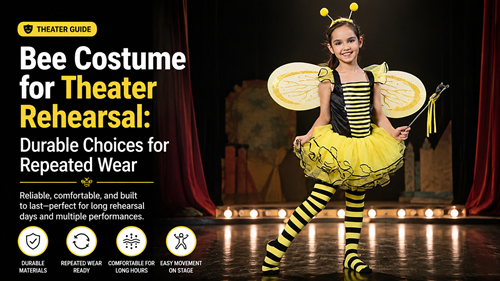
Bee Costume For Theater Rehearsal is easiest to choose when you start with the real activity rather than the costume photo. For theater directors and costume coordinators, the useful questions are fit, movement, comfort, visibility, accessories, weather, and how easily the look can be simplified during the event.
This guide uses the exact bee costume for theater rehearsal search intent as a practical buying framework. Theater rehearsal puts a costume through repeated dressing, movement, storage, sweat, makeup, props, and quick changes. Durability depends on how the whole garment is built and maintained, not just on whether the fabric feels thick. Always compare the exact seller size chart, material description, care label, and return information because costume construction varies widely between listings.
How To Evaluate Bee Costume For Theater Rehearsal
The first decision is whether the costume can handle the full event: arrival, walking, sitting, photos, food, weather, and the return trip. A bee costume for theater rehearsal that looks correct but restricts an essential part of the activity is the wrong fit even when the labelled size appears right.
Separate the base garment from the accessories. The striped clothing determines most of the fit and temperature, while wings, antenna, tutus, masks, props, or mascot heads affect clearance, pressure, vision, storage, and how long the wearer can stay dressed.
Read the exact listing instead of transferring assumptions from another brand. Size names, fabric descriptions, stretch, closures, accessory dimensions, and cleaning directions are not standardized enough to infer from a similar product.
Durability Checks For A Bee Costume For Theater Rehearsal
Inspect Stress Points Before First Rehearsal
Check underarms, side seams, waist elastic, zipper ends, wing attachment points, and headband joints. Reinforcing a known weak point early is easier than repairing a full tear before a show. Before ordering, compare the listing photos with the measurements, closures, and activity planned for the event. A feature that works in a studio photo can behave very differently during real movement.
Compare rehearsal costume durability for this feature, then confirm the exact listing or official instructions before ordering.
Plan The Wardrobe Around The Production
Decide which pieces are rehearsal-only, which are performance-only, and which must survive both. Keeping fragile wings out of early blocking rehearsals can extend their life. Use the product description as a starting point, then verify the dimension, material, attachment, or care detail that actually controls this decision. Do not assume the marketing label answers the fit question.
Use community theater wardrobe as a reference for this point, while checking the current dimensions, materials, or directions on the exact option you choose.
Choose Pieces That Tolerate Repetition
Repeated wear reveals heat, rubbing, closure fatigue, and fit issues that a one-night costume may hide. Let actors report problems before they become damage. Test this point with the full outfit rather than one piece in isolation. Shoes, base layers, wings, headwear, bags, and weather can change how the same costume feels and moves.
Review repeated wear dress up for a practical example, then verify that its fit and construction match the wearer and event.
Use The Label For Cleaning Decisions
Do not invent a washing method because rehearsal is frequent. Follow the attached care instructions and test spot-cleaning or laundering only when the garment permits it. If two options look similar, choose between them using comfort, adjustability, cleaning, and event duration instead of picking only by decoration. Practical differences become more important after the first hour.
For this decision, stage costume maintenance gives a useful comparison point; the exact product details should still control the final choice.
Protect Actor Movement
A well-fitted costume reduces trip and vision problems. In rehearsal, also test stairs, set pieces, entrances, and prop handling with every major costume component. Before ordering, compare the listing photos with the measurements, closures, and activity planned for the event. A feature that works in a studio photo can behave very differently during real movement.
Check actor movement clothing for this specific feature and compare it with the rest of the outfit before committing to a size or accessory setup.
Document Every Costume Piece
Photograph the complete look, label accessories, record sizes, and note repairs. A simple costume bible prevents pieces from being lost or assembled differently between rehearsals. Use the product description as a starting point, then verify the dimension, material, attachment, or care detail that actually controls this decision. Do not assume the marketing label answers the fit question.
Use production costume planning to compare this requirement, then confirm current seller details and event conditions before the costume is worn.
Rehearsal Wear Point Inspection
Use this comparison to turn the visual costume choice into a practical event check. The exact listing always takes priority when dimensions or materials differ.
| Check | What to Look For | Why It Matters |
|---|---|---|
| Underarm seam | Arm movement and sweat | Reinforce or repair before split grows |
| Zipper/closure | Frequent dressing | Keep free of loose threads |
| Wing mount | Repeated removal | Inspect elastic and attachment stitches |
| Headpiece | Drops and transport | Store in rigid container |
| Hem | Stage floors and stairs | Repair fraying immediately |
Create A Repeatable Costume Maintenance Routine
A short home test is more useful than discovering a problem after arrival. Put on the same base layer, shoes, accessories, and outerwear planned for the event, then repeat the movements the wearer will actually need.
Pre-Event Checklist
- Photograph the complete costume
- Label every removable piece
- Inspect seams weekly
- Keep a basic repair kit
- Follow care instructions exactly
- Air dry sweaty pieces when label allows
- Store wings and headwear protected
- Record repairs and replacement parts
Make one change at a time when something feels wrong. Loosen or remove an accessory, change the base layer, adjust the hem, or choose different shoes before replacing the entire outfit. This makes the source of the problem easier to identify.
Follow Care Labels And Stage Safety Rules
The safest costume is one that supports normal movement and the actual environment. Review FTC clothing care-label guidance alongside the product listing, venue rules, local weather, and the wearer’s individual needs. Official guidance does not replace the manufacturer’s size or care information, but it helps identify risks that product photos may not show.
Stop using or modify the costume if it blocks vision, causes pain or numbness, creates a trip hazard, becomes dangerously hot or cold, catches on mobility equipment, or cannot be removed quickly when necessary. Event plans should be flexible enough to simplify the look without forcing continued wear.
Choose Costume Pieces That Can Be Repaired And Repeated
The best bee costume for theater rehearsal is the option that still works after the photo is taken. Compare the exact dimensions and construction, test the complete outfit, and keep accessories removable whenever they create a practical compromise.
A premium-looking bee costume does not need to be complicated. Clear black-and-yellow styling, secure fit, comfortable movement, sensible care, and event-specific adjustments usually create a stronger result than adding more pieces simply because they are included in the set.
Frequently Asked Questions
Should the final bee costume be worn at every rehearsal?
Not always. Use rehearsal substitutes for fragile pieces until choreography and blocking require the final accessory.
What costume parts wear out fastest in rehearsal?
Closures, elastic, underarm seams, hems, wing mounts, and headbands often receive repeated stress.
Can theater costumes be washed after every rehearsal?
Only if the care label and construction support that frequency. Some pieces need spot cleaning, hand washing, or other care.
How can a costume team reduce lost accessories?
Label each item, photograph the complete set, use assigned storage bags or boxes, and check pieces in and out consistently.
When should a damaged costume be pulled from rehearsal?
Remove it when the damage creates a trip, snag, sharp-edge, closure, or visibility risk, or when continued use will turn a small repair into major damage.
