
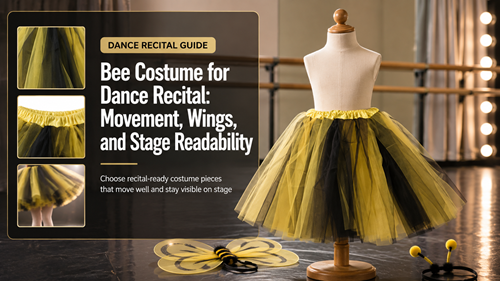
Bee Costume For Dance Recital is easiest to choose when you start with the real activity rather than the costume photo. For dance parents and recital instructors, the useful questions are fit, movement, comfort, visibility, accessories, weather, and how easily the look can be simplified during the event.
This guide uses the exact bee costume for dance recital search intent as a practical buying framework. Recital costumes have to work under stage lighting and repeated movement. A detail that looks delicate up close can disappear from the audience, while oversized wings or a stiff tutu can interrupt spacing, arm lines, turns, and partnering. Always compare the exact seller size chart, material description, care label, and return information because costume construction varies widely between listings.
How To Evaluate Bee Costume For Dance Recital
The first decision is whether the costume can handle the full event: arrival, walking, sitting, photos, food, weather, and the return trip. A bee costume for dance recital that looks correct but restricts an essential part of the activity is the wrong fit even when the labelled size appears right.
Separate the base garment from the accessories. The striped clothing determines most of the fit and temperature, while wings, antenna, tutus, masks, props, or mascot heads affect clearance, pressure, vision, storage, and how long the wearer can stay dressed.
Read the exact listing instead of transferring assumptions from another brand. Size names, fabric descriptions, stretch, closures, accessory dimensions, and cleaning directions are not standardized enough to infer from a similar product.
Performance Checks For A Bee Costume For Dance Recital
Start With The Choreography
Review floor work, turns, jumps, arm pathways, and formation spacing before choosing decorative pieces. The costume should support the movement rather than force choreography changes. Before ordering, compare the listing photos with the measurements, closures, and activity planned for the event. A feature that works in a studio photo can behave very differently during real movement.
Compare dance performance costume for this feature, then confirm the exact listing or official instructions before ordering.
Make The Bee Theme Visible At Distance
High-contrast yellow and black, one clear silhouette, and a few large details usually read better than many tiny accessories under stage lighting. Use the product description as a starting point, then verify the dimension, material, attachment, or care detail that actually controls this decision. Do not assume the marketing label answers the fit question.
Use stage friendly bee outfit as a reference for this point, while checking the current dimensions, materials, or directions on the exact option you choose.
Check Skirt Volume During Turns
A tutu should move without tangling hands, catching another dancer, or blocking floor positions. Test it during the fastest turn sequence, not only standing still. Test this point with the full outfit rather than one piece in isolation. Shoes, base layers, wings, headwear, bags, and weather can change how the same costume feels and moves.
Review flexible tutu costume for a practical example, then verify that its fit and construction match the wearer and event.
Secure Wings For Repeated Motion
Wing straps can shift with port de bras and jumps. Use the attachment method approved by the instructor and test for rubbing after a full rehearsal. If two options look similar, choose between them using comfort, adjustability, cleaning, and event duration instead of picking only by decoration. Practical differences become more important after the first hour.
For this decision, secure wings for dancers gives a useful comparison point; the exact product details should still control the final choice.
Protect The Full Range Of Motion
Costumes should fit well and avoid trip hazards. For dance, also check that headpieces stay clear of vision and that no accessory becomes hard or sharp during movement. Before ordering, compare the listing photos with the measurements, closures, and activity planned for the event. A feature that works in a studio photo can behave very differently during real movement.
Check recital costume movement for this specific feature and compare it with the rest of the outfit before committing to a size or accessory setup.
Coordinate The Ensemble Look
If several dancers are bees, consistent yellow and black placement can create unity even when exact sizes or costume cuts differ. Keep accessories standardized only where they are comfortable. Use the product description as a starting point, then verify the dimension, material, attachment, or care detail that actually controls this decision. Do not assume the marketing label answers the fit question.
Use children stagewear ideas to compare this requirement, then confirm current seller details and event conditions before the costume is worn.
Dance Movement And Costume Interaction
Use this comparison to turn the visual costume choice into a practical event check. The exact listing always takes priority when dimensions or materials differ.
| Check | What to Look For | Why It Matters |
|---|---|---|
| Arm circle | Wings and straps | No collision with hands or face |
| Turn | Tutu/skirt volume | No tangling or excessive lift |
| Jump | Waist and shoulder fit | No costume shifting |
| Floor work | Back decorations | Avoid hard pieces under body |
| Formation | Wing width | Maintain spacing between dancers |
Rehearse The Full Costume Before Stage Week
A short home test is more useful than discovering a problem after arrival. Put on the same base layer, shoes, accessories, and outerwear planned for the event, then repeat the movements the wearer will actually need.
Pre-Event Checklist
- Ask the instructor about costume rules
- Rehearse every major movement in costume
- Use recital shoes during the test
- Check wing clearance with another dancer
- Secure hair and headpiece together
- Inspect costume after laundering
- Pack matching repair supplies
- Label every costume piece
Make one change at a time when something feels wrong. Loosen or remove an accessory, change the base layer, adjust the hem, or choose different shoes before replacing the entire outfit. This makes the source of the problem easier to identify.
The Choreography And Instructor’s Rules Come First
The safest costume is one that supports normal movement and the actual environment. Review CPSC fit and visibility recommendations for costumes alongside the product listing, venue rules, local weather, and the wearer’s individual needs. Official guidance does not replace the manufacturer’s size or care information, but it helps identify risks that product photos may not show.
Stop using or modify the costume if it blocks vision, causes pain or numbness, creates a trip hazard, becomes dangerously hot or cold, catches on mobility equipment, or cannot be removed quickly when necessary. Event plans should be flexible enough to simplify the look without forcing continued wear.
Make The Bee Theme Read Clearly Without Fighting The Dance
The best bee costume for dance recital is the option that still works after the photo is taken. Compare the exact dimensions and construction, test the complete outfit, and keep accessories removable whenever they create a practical compromise.
A premium-looking bee costume does not need to be complicated. Clear black-and-yellow styling, secure fit, comfortable movement, sensible care, and event-specific adjustments usually create a stronger result than adding more pieces simply because they are included in the set.
Frequently Asked Questions
Should dancers rehearse in the full costume?
Yes, before recital week. A full-costume rehearsal reveals strap movement, wing clearance, skirt volume, and shoe interactions.
Are large bee wings good on stage?
They may read clearly, but they can interfere with choreography and spacing. Use the smallest wing size that achieves the visual effect the instructor wants.
What fabric is best for a dance bee costume?
Choose fabric based on stretch, comfort, opacity, care, and choreography rather than one fiber name. The studio may also have specific requirements.
How should a bee headband be secured for dance?
Follow the instructor’s approved method, usually with stable hair placement and pins or elastic where appropriate. Test it through turns.
Can different dancers wear slightly different bee costumes?
Yes if the production allows it. Repeating key colors and accessories can preserve stage unity even when body shapes require different cuts.
