
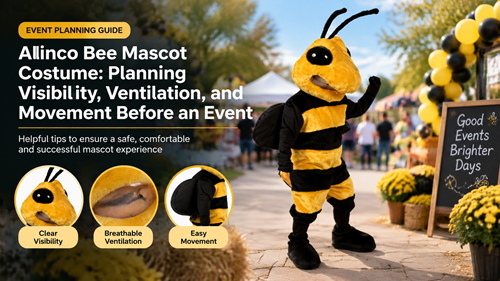
Alinco Bee Mascot Costume is easier to choose when the buying decision starts with the real wearer and event. This guide is for event organizers and performers evaluating a full bee mascot suit. It focuses on fit, comfort, movement, accessories, and the practical details that are easy to miss when shopping from photos alone.
Full mascot suits are high-impact visually but create more heat, limited vision, and a larger walking footprint than ordinary costumes. A rehearsal in the actual venue or a similar space is more useful than a quick fitting in a bedroom. Always compare the current seller size chart, material details, included pieces, care instructions, and return information because costume construction can change between listings and sizes.
How to Evaluate Alinco Bee Mascot Costume
Alinco Bee Mascot Costume should be judged by how it works through the full activity, not only by whether the colors and shape look right. Check the garment or accessory from arrival through sitting, walking, photos, food, weather changes, and the trip home.
Separate the base costume from optional pieces. The base garment controls most of the fit and temperature, while wings, headwear, gloves, footwear, props, tails, or beauty accessories change clearance, pressure, storage, and how long the complete look stays comfortable.
Use the exact product listing as the final source for dimensions, materials, age guidance, included parts, and care. Similar bee costumes can use very different sizing and construction.
What to Check Before Buying Alinco Bee Mascot Costume
Bee Mascot Event Outfit
Use current body measurements and the product-specific chart rather than relying only on age or everyday clothing size. Test the fit while sitting, reaching, and walking.
For a concrete on-site comparison, review bee mascot event outfit, then verify the exact measurements, materials, closures, or accessory details that apply to the option you choose.
Mascot Costume Visibility Tips
Plan visibility, heat, doorway clearance, and assistance before the event. Full character suits should be rehearsed with the performer and a handler when sight or hearing is limited.
For a concrete on-site comparison, review mascot costume visibility tips, then verify the exact measurements, materials, closures, or accessory details that apply to the option you choose.
Adult Mascot Ventilation
Temperature control is part of the costume plan. Test airflow before the event, keep openings clear, schedule breaks, and stop if the wearer becomes overheated or uncomfortable.
For a concrete on-site comparison, review adult mascot ventilation, then verify the exact measurements, materials, closures, or accessory details that apply to the option you choose.
Promotional Bee Character Suit
Plan visibility, heat, doorway clearance, and assistance before the event. Full character suits should be rehearsed with the performer and a handler when sight or hearing is limited.
For a concrete on-site comparison, review promotional bee character suit, then verify the exact measurements, materials, closures, or accessory details that apply to the option you choose.
Mascot Movement Planning
Test real movement instead of only checking the mirror. Walk, turn, sit, bend, and reach in the complete outfit, then remove or adjust anything that shifts, rubs, or restricts normal motion.
For a concrete on-site comparison, review mascot movement planning, then verify the exact measurements, materials, closures, or accessory details that apply to the option you choose.
Bee Character Event Costume
Plan visibility, heat, doorway clearance, and assistance before the event. Full character suits should be rehearsed with the performer and a handler when sight or hearing is limited.
For a concrete on-site comparison, review bee character event costume, then verify the exact measurements, materials, closures, or accessory details that apply to the option you choose.
Quick Comparison Table
Use this table during the try-on so visual details become checks that can be repeated before the event.
| Check | What Good Looks Like | Why It Matters |
|---|---|---|
| Head visibility | Clear forward and side sight | Use a handler when limited |
| Ventilation | Heat can escape during breaks | Schedule head-off recovery |
| Hand control | Performer can hold rails and doors | Avoid oversized rigid hands |
| Footwear | Stable and secure | Test stairs and curbs |
| Costume width | Fits planned doors and aisles | Protects performer and guests |
Event-Day Fit and Setup
Do the complete wear test in the same sequence planned for event day. Problems with pressure, slipping, heat, visibility, or storage are easier to solve at home than in a school hallway, parking lot, party venue, or trick-or-treat route.
Before You Leave
- Measure the performer before the event
- Test the full head and body together
- Walk through standard doorways
- Practice turns and stairs
- Set a hand signal with the handler
- Schedule cooling and water breaks
- Keep a repair kit nearby
- Dry the costume fully before storage
Change one variable at a time when something feels wrong. Adjust or remove an accessory, change the base layer, correct the hem, or choose different footwear before replacing the entire costume.
Safety and Comfort
Mascot performers need planned cooling, water, and assistance when visibility or hearing is reduced. Stop the performance if the wearer becomes dizzy, overheated, disoriented, short of breath, or unable to navigate safely.
For a broader safety reference, review CPSC Halloween costume safety guidance alongside the exact product directions and the rules of the event or venue.
Final Buying Takeaway
Alinco Bee Mascot Costume is a stronger purchase when the fit, accessories, and event plan are tested together. The best option is the one that stays recognizable while remaining comfortable and manageable for the intended activity.
Measure first, rehearse real movement, keep optional pieces removable, and prioritize practical comfort over a perfect photo. That approach reduces sizing mistakes and last-minute changes.
Frequently Asked Questions
Does a bee mascot performer need a handler?
A handler is strongly useful when the suit limits sight, hearing, heat release, or walking clearance.
How should mascot ventilation be tested?
Wear the complete suit for a controlled short session, monitor heat and breathing, then plan breaks before the real event.
Can a mascot use stairs?
Only after the performer has tested the exact footwear and sight line. A handler should assist when visibility is limited.
How long can someone stay in a mascot suit?
There is no universal safe time. Heat, exertion, room temperature, suit design, and the individual performer all matter.
What should be checked after the event?
Inspect seams, fasteners, fan or ventilation parts if present, and dry every section completely before storage.
