
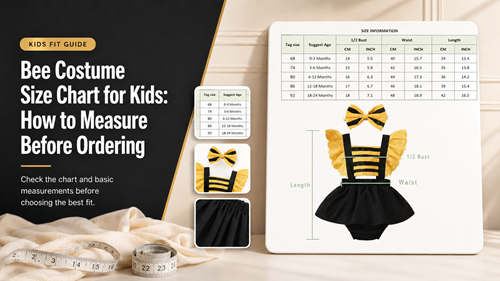
Bee Costume Size Chart For Kids is easiest to choose when you start with the real activity rather than the costume photo. For parents shopping online for school-age children, the useful questions are fit, movement, comfort, visibility, accessories, weather, and how easily the look can be simplified during the event.
This guide uses the exact bee costume size chart for kids search intent as a practical buying framework. Fit problems usually come from relying on age labels instead of current body measurements. Chest, waist, height, torso length, sleeve or leg length, and the costume construction all affect whether a child can move, sit, climb steps, and wear ordinary shoes comfortably. Always compare the exact seller size chart, material description, care label, and return information because costume construction varies widely between listings.
How To Evaluate Bee Costume Size Chart For Kids
The first decision is whether the costume can handle the full event: arrival, walking, sitting, photos, food, weather, and the return trip. A bee costume size chart for kids that looks correct but restricts an essential part of the activity is the wrong fit even when the labelled size appears right.
Separate the base garment from the accessories. The striped clothing determines most of the fit and temperature, while wings, antenna, tutus, masks, props, or mascot heads affect clearance, pressure, vision, storage, and how long the wearer can stay dressed.
Read the exact listing instead of transferring assumptions from another brand. Size names, fabric descriptions, stretch, closures, accessory dimensions, and cleaning directions are not standardized enough to infer from a similar product.
Measurements That Matter Before You Choose A Kids Bee Costume
Start With Real Body Measurements
Use a soft tape and record the child’s current measurements rather than relying on a birthday or school grade. Measure over the type of clothing that will actually sit under the costume. Before ordering, compare the listing photos with the measurements, closures, and activity planned for the event. A feature that works in a studio photo can behave very differently during real movement.
Compare measure child for costume for this feature, then confirm the exact listing or official instructions before ordering.
Compare The Seller’s Own Chart
Sizing labels vary across brands, so a medium from one listing may not match a medium from another. Check the chart attached to the exact product page. Use the product description as a starting point, then verify the dimension, material, attachment, or care detail that actually controls this decision. Do not assume the marketing label answers the fit question.
Use kids costume fit guide as a reference for this point, while checking the current dimensions, materials, or directions on the exact option you choose.
Check Chest Room On Toddlers
For younger children, chest room matters for breathing, bending, and adding a thin layer. Avoid pulling the tape tight or adding a large amount of guessed allowance. Test this point with the full outfit rather than one piece in isolation. Shoes, base layers, wings, headwear, bags, and weather can change how the same costume feels and moves.
Review toddler chest measurement for a practical example, then verify that its fit and construction match the wearer and event.
Watch Overall Costume Length
Hem length, cape length, skirt fullness, and dangling accessories can create trip risks. Compare garment dimensions with the child’s height and shoe choice. If two options look similar, choose between them using comfort, adjustability, cleaning, and event duration instead of picking only by decoration. Practical differences become more important after the first hour.
For this decision, costume length for children gives a useful comparison point; the exact product details should still control the final choice.
Account For Outfit Construction
A stretchy dress, foam body, jumpsuit, tutu, and multi-piece set can all fit differently at the same labelled size. Look at closures and adjustable parts. Before ordering, compare the listing photos with the measurements, closures, and activity planned for the event. A feature that works in a studio photo can behave very differently during real movement.
Check child outfit sizing tips for this specific feature and compare it with the rest of the outfit before committing to a size or accessory setup.
Do A Final Safety Check
Before the event, confirm the outfit is not dragging, shoes are sturdy, headwear stays clear of the eyes, and the child remains visible after dark. Use the product description as a starting point, then verify the dimension, material, attachment, or care detail that actually controls this decision. Do not assume the marketing label answers the fit question.
Use Halloween measurement checklist to compare this requirement, then confirm current seller details and event conditions before the costume is worn.
Kids Costume Measurement Check
Use this comparison to turn the visual costume choice into a practical event check. The exact listing always takes priority when dimensions or materials differ.
| Check | What to Look For | Why It Matters |
|---|---|---|
| Chest | Around the fullest part | Keep tape level; do not squeeze |
| Waist | Natural waist | Measure over expected base layer |
| Height | Floor to top of head | Useful for full-body and long costumes |
| Torso | Shoulder through body as listing directs | Important for jumpsuits and bodysuits |
| Costume length | Garment dimension on listing | Check hem clearance with shoes |
Measure Once And Compare Every Listing Carefully
A short home test is more useful than discovering a problem after arrival. Put on the same base layer, shoes, accessories, and outerwear planned for the event, then repeat the movements the wearer will actually need.
Pre-Event Checklist
- Use a flexible tape measure
- Measure over light event clothing
- Write measurements down immediately
- Compare each number with the seller chart
- Check the larger measurement when between sizes
- Confirm closures and elastic placement
- Test sitting, walking and stairs
- Recheck wings, headband and hem together
Make one change at a time when something feels wrong. Loosen or remove an accessory, change the base layer, adjust the hem, or choose different shoes before replacing the entire outfit. This makes the source of the problem easier to identify.
Fit And Visibility Checks Before Halloween Night
The safest costume is one that supports normal movement and the actual environment. Review CPSC costume fit and visibility guidance alongside the product listing, venue rules, local weather, and the wearer’s individual needs. Official guidance does not replace the manufacturer’s size or care information, but it helps identify risks that product photos may not show.
Stop using or modify the costume if it blocks vision, causes pain or numbness, creates a trip hazard, becomes dangerously hot or cold, catches on mobility equipment, or cannot be removed quickly when necessary. Event plans should be flexible enough to simplify the look without forcing continued wear.
Use The Size Chart As A Starting Point, Not A Guess
The best bee costume size chart for kids is the option that still works after the photo is taken. Compare the exact dimensions and construction, test the complete outfit, and keep accessories removable whenever they create a practical compromise.
A premium-looking bee costume does not need to be complicated. Clear black-and-yellow styling, secure fit, comfortable movement, sensible care, and event-specific adjustments usually create a stronger result than adding more pieces simply because they are included in the set.
Frequently Asked Questions
Should I order a bee costume by age or measurements?
Use the seller’s measurement chart first. Age ranges are only broad references and children of the same age can have very different proportions.
What if my child is between two costume sizes?
Compare the limiting measurement, costume construction, intended base layer, and return policy. A slightly roomier size is often easier to adjust than an outfit that restricts movement.
How much room should a kids costume have?
Enough for comfortable breathing, sitting, reaching, and walking without creating loose fabric that drags or catches.
Should shoes be included when checking costume length?
Yes. Test the actual shoes planned for the event because sole height and fit can change hem clearance.
When should I re-measure?
Re-measure if the costume is purchased well before the event, after a growth spurt, or whenever the listed dimensions are close to the child’s current measurements.
