
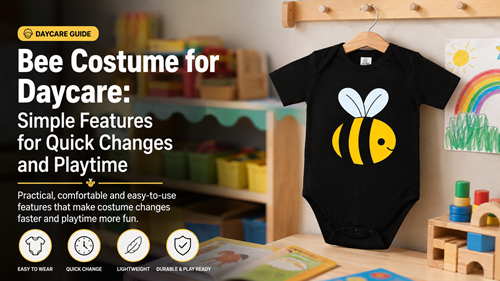
Bee Costume For Daycare is easiest to choose when you start with the real activity rather than the costume photo. For parents and daycare staff choosing practical dress-up clothing, the useful questions are fit, movement, comfort, visibility, accessories, weather, and how easily the look can be simplified during the event.
This guide uses the exact bee costume for daycare search intent as a practical buying framework. Daycare costumes need to work for teachers as well as children. Quick bathroom access, nap transitions, floor play, outdoor time, food, handwashing, and storage in a cubby are more important than elaborate detailing. Always compare the exact seller size chart, material description, care label, and return information because costume construction varies widely between listings.
How To Evaluate Bee Costume For Daycare
The first decision is whether the costume can handle the full event: arrival, walking, sitting, photos, food, weather, and the return trip. A bee costume for daycare that looks correct but restricts an essential part of the activity is the wrong fit even when the labelled size appears right.
Separate the base garment from the accessories. The striped clothing determines most of the fit and temperature, while wings, antenna, tutus, masks, props, or mascot heads affect clearance, pressure, vision, storage, and how long the wearer can stay dressed.
Read the exact listing instead of transferring assumptions from another brand. Size names, fabric descriptions, stretch, closures, accessory dimensions, and cleaning directions are not standardized enough to infer from a similar product.
Features That Make A Bee Costume For Daycare Easier
Use Clothing That Feels Familiar
A striped shirt, soft leggings, simple dress, or tunic can feel more like ordinary clothing than a foam or one-piece character suit. Familiarity also makes changing faster. Before ordering, compare the listing photos with the measurements, closures, and activity planned for the event. A feature that works in a studio photo can behave very differently during real movement.
Compare daycare dress up clothes for this feature, then confirm the exact listing or official instructions before ordering.
Keep Closures Simple
Choose closures adults can open quickly without removing several accessories first. For toilet training, avoid designs that take a long time to pull down or refasten. Use the product description as a starting point, then verify the dimension, material, attachment, or care detail that actually controls this decision. Do not assume the marketing label answers the fit question.
Use easy change costume as a reference for this point, while checking the current dimensions, materials, or directions on the exact option you choose.
Support Pretend Play Without Bulk
The outfit should allow floor sitting, reaching, dancing, and walking. Save stiff or delicate additions for short supervised activities rather than all-day wear. Test this point with the full outfit rather than one piece in isolation. Shoes, base layers, wings, headwear, bags, and weather can change how the same costume feels and moves.
Review preschool pretend play outfit for a practical example, then verify that its fit and construction match the wearer and event.
Remove Small Or Rigid Extras
Ask the center which accessories are allowed. Avoid sharp, long, or easily detached pieces, and make sure headwear does not cover vision. If two options look similar, choose between them using comfort, adjustability, cleaning, and event duration instead of picking only by decoration. Practical differences become more important after the first hour.
For this decision, classroom safe accessories gives a useful comparison point; the exact product details should still control the final choice.
Read The Cleaning Instructions
Daycare clothing is likely to meet food, paint, grass, and playground dirt. Check the care label before assuming the costume can go in a normal washer and dryer. Before ordering, compare the listing photos with the measurements, closures, and activity planned for the event. A feature that works in a studio photo can behave very differently during real movement.
Check washable kids costume for this specific feature and compare it with the rest of the outfit before committing to a size or accessory setup.
Plan For Nap And Rest Time
A child should change out of bulky wings, headbands, tutus, or padded costumes before sleeping. Send a clearly labelled storage bag and ordinary backup clothes. Use the product description as a starting point, then verify the dimension, material, attachment, or care detail that actually controls this decision. Do not assume the marketing label answers the fit question.
Use nap friendly dress up to compare this requirement, then confirm current seller details and event conditions before the costume is worn.
Daycare Routine And Costume Design
Use this comparison to turn the visual costume choice into a practical event check. The exact listing always takes priority when dimensions or materials differ.
| Check | What to Look For | Why It Matters |
|---|---|---|
| Arrival | Easy on/off outer piece | Avoid complex assembly |
| Bathroom/diaper change | Clear waist and crotch access | Avoid hard back zippers staff cannot reach |
| Floor play | Soft flexible clothing | Remove stiff wings |
| Outdoor play | Weather layer and sturdy shoes | No dragging hems |
| Nap/rest | Change to normal sleep-safe clothing | Store all costume accessories |
Send A Costume Staff Can Simplify Quickly
A short home test is more useful than discovering a problem after arrival. Put on the same base layer, shoes, accessories, and outerwear planned for the event, then repeat the movements the wearer will actually need.
Pre-Event Checklist
- Ask about the daycare costume policy
- Label every removable piece
- Choose easy bathroom access
- Avoid small loose decorations
- Pack ordinary backup clothes
- Send a storage bag
- Follow fabric care instructions
- Tell staff about any sensory concerns
Make one change at a time when something feels wrong. Loosen or remove an accessory, change the base layer, adjust the hem, or choose different shoes before replacing the entire outfit. This makes the source of the problem easier to identify.
Follow The Daycare Policy And Remove Risky Accessories
The safest costume is one that supports normal movement and the actual environment. Review FTC clothing care-label guidance alongside the product listing, venue rules, local weather, and the wearer’s individual needs. Official guidance does not replace the manufacturer’s size or care information, but it helps identify risks that product photos may not show.
Stop using or modify the costume if it blocks vision, causes pain or numbness, creates a trip hazard, becomes dangerously hot or cold, catches on mobility equipment, or cannot be removed quickly when necessary. Event plans should be flexible enough to simplify the look without forcing continued wear.
A Simple Bee Outfit Usually Works Better At Daycare
The best bee costume for daycare is the option that still works after the photo is taken. Compare the exact dimensions and construction, test the complete outfit, and keep accessories removable whenever they create a practical compromise.
A premium-looking bee costume does not need to be complicated. Clear black-and-yellow styling, secure fit, comfortable movement, sensible care, and event-specific adjustments usually create a stronger result than adding more pieces simply because they are included in the set.
Frequently Asked Questions
Can a child wear a full bee costume to daycare?
That depends on the center’s policy. Simple clothing-style costumes are usually easier for bathroom, play, meals, and transitions.
Are bee wings suitable for daycare?
Only if the center permits them and they are soft, secure, and removable. Many settings may prefer wings to be used only for a short activity.
What should a daycare costume avoid?
Avoid long trailing fabric, masks that obstruct vision, hard or sharp accessories, tiny loose parts, and complicated closures.
Should the costume be machine washable?
Washability is very helpful, but use the actual care label rather than assuming every costume fabric can be machine washed.
What should I pack with the costume?
Pack normal backup clothing, a labelled bag for accessories, and any instructions staff need to simplify the outfit during the day.
